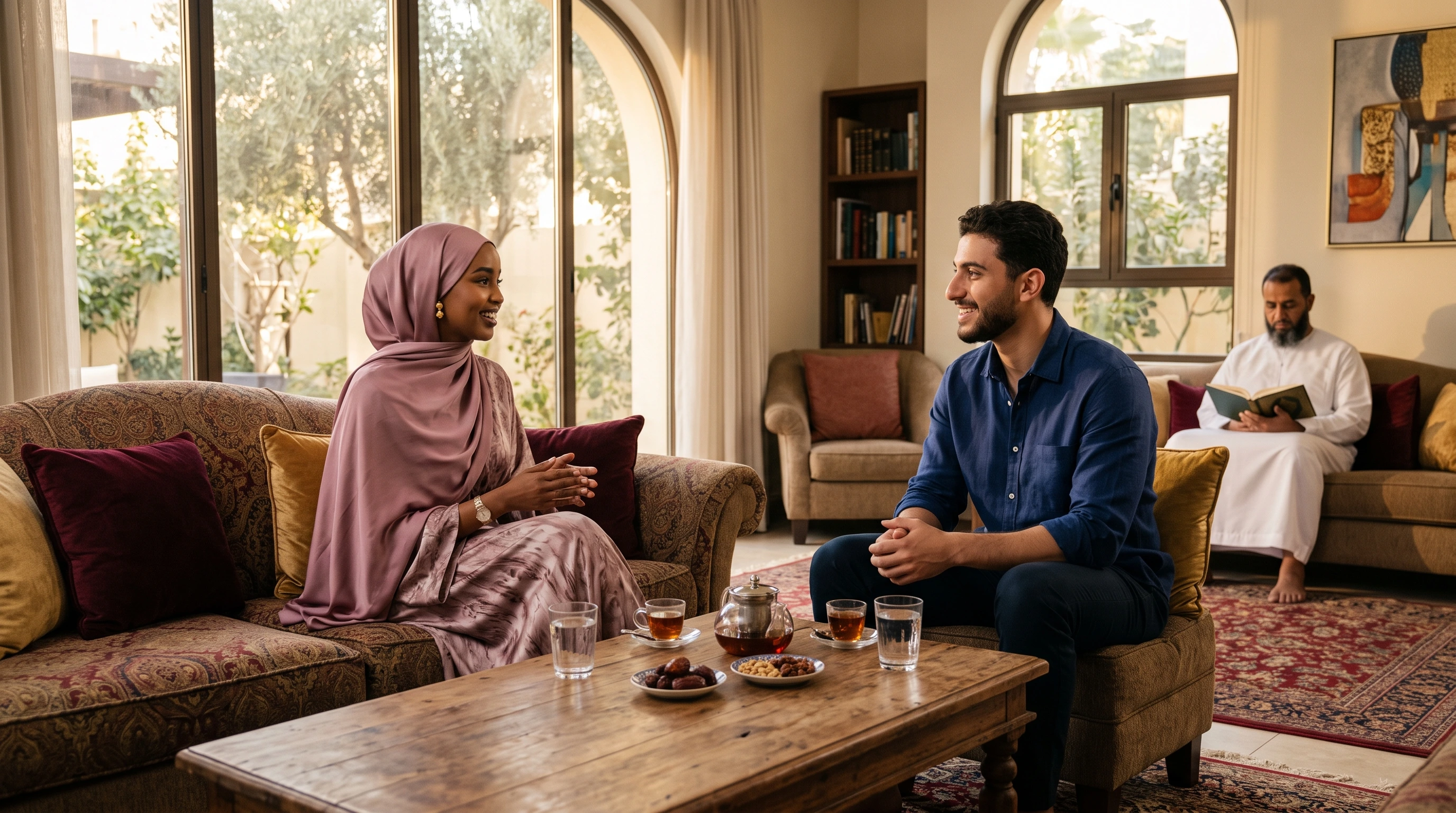
Choosing a spouse is one of the most critical spiritual and life decisions a Muslim makes. Yet in modern society, practicing Muslims face a persistent dilemma: contemporary dating culture often clashes with Islamic ethics, while traditional matchmaking methods do not always provide sufficient opportunity to evaluate real compatibility.
This raises a central question: What is Ta'aruf, and how does it provide a halal path to marriage?
Definition: Ta'aruf (تعارف) is the Islamic framework for getting to know a prospective marriage partner with deliberate purpose, mutual transparency, and family or guardian (wali) awareness, ensuring all communication remains within Islamic boundaries prior to Nikah.
Linguistic Meaning and Quranic Foundation
The term Ta'aruf derives from the Arabic root 'arafa (عَرَفَ), meaning to know, perceive, or become acquainted with someone.
While the contemporary term "Ta'aruf" represents a practical protocol rather than a distinct ritual, the principle of intentional acquaintance is established directly in the Qur'an:
"O mankind, indeed We have created you from male and female and made you peoples and tribes that you may know one another [li-ta'arafu]..." (Surah Al-Hujurat 49:13)
Islamic jurists emphasize that this principle applies directly to matrimonial investigations. The goal is to obtain verified knowledge of a person's faith, values, and disposition to determine if a lasting covenant can be sustained.
The Sunnah: Direct Observation and Inquiries
Islam does not mandate blind arranged marriages. In fact, the Prophet Muhammad ﷺ actively encouraged prospective partners to see each other before committing to a union.
When Al-Mughirah ibn Shu'bah proposed to a woman, the Prophet ﷺ instructed him:
"Look at her, for it is more suitable that love should be fostered between you." (Jami` at-Tirmidhi 1087, Hasan)
Ta'aruf builds directly on this balance: it eliminates unmonitored privacy and physical intimacy before Nikah while facilitating direct, structured evaluation of character and long-term goals.
Core Differences: Ta'aruf vs. Modern Dating
| Islamic Ta'aruf | Conventional Dating |
|---|---|
| Objective: Clear, upfront intent to evaluate for Nikah | Objective: Open-ended emotional/romantic exploration |
| Accountability: Wali and family involvement from inception | Accountability: Strictly private between two individuals |
| Boundaries: Conducted in open or chaperoned spaces; no physical contact | Boundaries: Arbitrary; emotional and physical attachment precedes commitment |
| Evaluation: Character, religion, finances, and compatibility first | Evaluation: Chemistry first, long-term compatibility questions later |
The Six Practical Stages of a Halal Ta'aruf
1. Clarifying Niyyah (Intention)
The pursuit of marriage begins as an act of worship. Before reaching out to a prospective match, both individuals must verify their readiness for marriage, rather than seeking validation or social distraction.
2. Finding a Match via Halal Channels
Matches typically arise via trusted relatives, community matchmakers, or purpose-built platforms such as a Sunnah-based Muslim marriage platform that enforce guardian supervision and identity verification.
3. Structured Compatibility Conversations
Conversations should address pivotal topics: financial expectations, religious practice, career trajectories, family relationships, and parenting philosophies. Early clarity prevents painful incompatibilities later.
4. Chaperoned Meetings and Wali Engagement
To avoid secluded one-on-one environments (khalwah), discussions occur in open public settings or include the guardian (wali). This ensures transparency, safety, and mutual respect for both individuals.
5. Istikharah and Consultation (Mashwarah)
Once compatibility is confirmed, Muslims consult experienced mentors and perform the Sunnah Istikhara prayer guide, seeking divine clarity before making a final commitment.
6. The Nikah or a Graceful Exit
If mutual agreement is reached, families coordinate the formal marriage contract (Nikah). If incompatibility surfaces, the process should be concluded promptly, respectfully, and without emotional manipulation.
Essential Questions to Ask During Ta'aruf
-
Deen and Practice: How do you balance daily prayers, charity, and ongoing religious growth in your daily schedule?
-
Financial Vision: What are your principles regarding debt, savings, financial transparency, and household contributions?
-
Conflict Management: When disagreements happen, do you prefer immediate discussion or taking time to reflect before resolving matters?
-
Family Dynamics: What boundaries, expectations, and geographical proximity do you anticipate when it comes to in-laws?
Can Ta'aruf Be Conducted Online?
Online introduction is an acceptable avenue for modern Muslims, provided that digital interactions maintain Islamic propriety. A legitimate online Ta'aruf environment eliminates casual swipe culture, requires authentic verification, and provides direct oversight mechanisms for the bride's guardian.